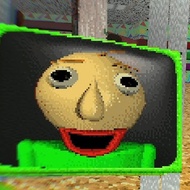
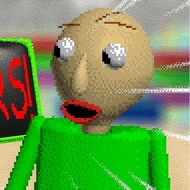
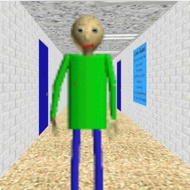
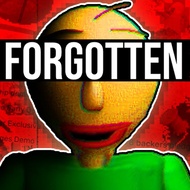

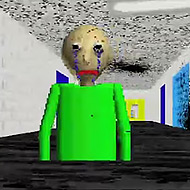
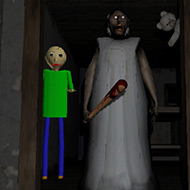
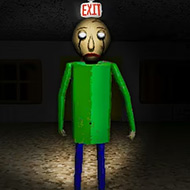
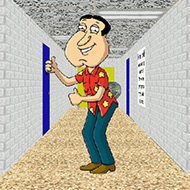

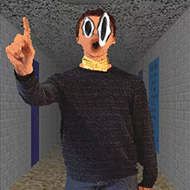
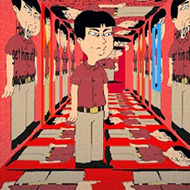
Baldi’s Family Mod

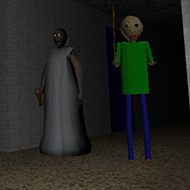
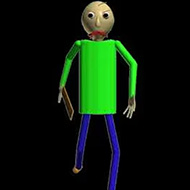
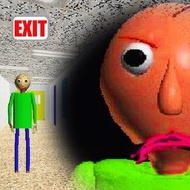
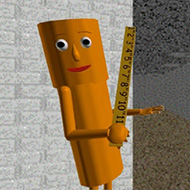
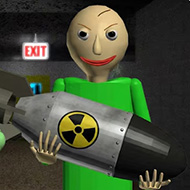
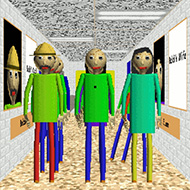
What happens when the population of Baldi’s schoolhouse expands beyond its original cast? Baldi’s Family Mod answers that question by introducing family members into the same environment where Baldi, Playtime, the Principal of the Thing, and Gotta Sweep already operate. The familiar seven-notebook structure stays in place, the You Can Think Pad still produces its unsolvable third question, and Baldi’s ruler-slap still accelerates after every wrong answer — but the character interactions around those fixed mechanics multiply. Players who have the base game memorised arrive in Baldi’s Family Mod expecting to apply their usual routing logic and find that additional presences in the hallways make every familiar decision more complicated.
New Characters and How They Fit Into Baldi’s Family Mod
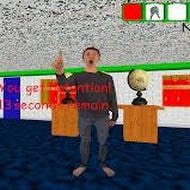
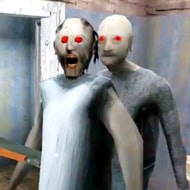
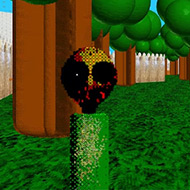
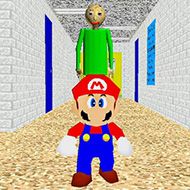
The core addition in Baldi’s Family Mod is the introduction of family-themed characters who operate alongside the existing cast rather than replacing them. This is the design distinction that matters most for players approaching the mod: you are not swapping one character roster for another. Baldi is still present, still responding to wrong You Can Think Pad answers, still accelerating toward you with his ruler. The family members add additional layers of encounter management on top of the base-game cast rather than simplifying or replacing it. The result is a schoolhouse where character overlap — two or more characters occupying the same corridor section simultaneously — happens more often than in the original game.
For players used to the base game’s character count, the increased population density is the first significant adjustment. In the standard schoolhouse, you can usually identify where each character is through audio — Baldi’s ruler smacks, Playtime’s music-box humming, Gotta Sweep’s enthusiastic sweeping announcements — and plan routes around that information. Baldi’s Family Mod adds voices and behaviours to track that were not in your original audio map. Players who rely heavily on audio positioning for character avoidance find the early runs in this mod disorienting in the same way Baldi’s School at Night is disorienting: familiar tracking tools are present, but there are now more signals to process simultaneously.
Gotta Sweep’s role in Baldi’s Family Mod deserves specific attention. In the base game, Gotta Sweep is simultaneously an obstacle and a useful spatial reference — when he announces “Gotta sweep sweep sweep!” and pushes across a corridor, he clears a path through other characters while also blocking yours. With a larger character population in the hallways, Gotta Sweep’s sweeping behaviour becomes more consequential. A sweep that pushes Baldi away from your position is enormously valuable. A sweep that herds additional family characters toward your next objective is a run-altering complication. Learning which corridor sections Gotta Sweep typically sweeps through, and timing your movement around those sweeps, becomes more strategically important here than in the standard schoolhouse.
Notebook Routing and Pressure Buildup in Baldi’s Family Mod
The seven-notebook structure of Baldi’s Family Mod means the run follows the same arc as the base game: early notebooks are relatively manageable, and each You Can Think Pad interaction that produces a wrong answer on the unsolvable third question tightens the pressure. What changes is the starting difficulty of each notebook sequence. In the base game, the window between completing one notebook and approaching the next is often safe enough to reorient, pick up an item, and plan the next move. With more characters active in the hallways, that window compresses. The route between notebooks has more potential interruptions.
Item usage in Baldi’s Family Mod favours a more aggressive early strategy than the base game typically rewards. Players who hoard BSODA and Baldi’s Least Favorite Tape for the final two notebooks — a conservative approach that works reasonably well in the standard schoolhouse — find themselves in situations in the mid-run where they needed that item two notebooks ago and it is now too late. The additional character encounters in hallways create emergencies in the first half of the run that the base game rarely generates at the same frequency. Using a BSODA at notebook three to resolve a dangerous character cluster is not wasteful in Baldi’s Family Mod; it is often the correct decision.
Arts and Crafters occupies an interesting position in Baldi’s Family Mod. In the base game, Arts and Crafters becomes aggressive once you hold more notebooks than him — six notebooks collected triggers his teleportation attack, which spins around you and moves you to a random location near an open elevator while simultaneously alerting Baldi. In a mod with additional characters populating the hallways, being Arts and Crafters-teleported into a different section of the schoolhouse is more likely to place you in an already-occupied area than in the base game. Players who plan to avoid the Arts and Crafters teleport by completing the final notebooks quickly find this strategy requires tighter execution in Baldi’s Family Mod than in the original.
Stamina and Movement Strategy in Baldi’s Family Mod
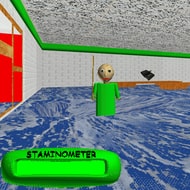
The stamina bar from the base game is unchanged in Baldi’s Family Mod. Holding Shift runs you faster but depletes the bar; walking and standing replenish it. What changes is how often you need to make that run-or-walk decision. In the base game, many hallway sections are clear enough that walking is a viable default and running is reserved for specific Baldi close-calls. With additional characters in the hallways of Baldi’s Family Mod, the frequency of situations where running is preferable increases. Players who start the mod with a walk-first approach burn through stamina faster than they expect, because the hallways produce more characters requiring reactive sprints.
The look-behind mechanic — Spacebar — is used more often by experienced players in Baldi’s Family Mod than in the base game. In the standard schoolhouse, checking behind you is most important when Baldi’s ruler-slap has gotten loud. With a larger character roster, a sound from behind could be a family character approaching from a direction you just opened, or the Principal of the Thing about to issue a detention for running in the halls. Getting a detention from the Principal while a family character has already blocked your forward path is one of the more common ways runs end in Baldi’s Family Mod, and it is the type of situation the look-behind habit helps prevent.
One detail that players notice after several runs: the Principal of the Thing’s patrol routes in Baldi’s Family Mod cover more effective ground simply because there are more characters generating noise and movement for him to respond to. In the base game, experienced players can sometimes predict which hallway sections the Principal is likely to occupy at a given point in the run. In Baldi’s Family Mod, the activity of additional characters changes the acoustic environment in ways that affect the Principal’s positioning more variably. Players who have the Principal’s base-game patrol tendencies memorised find that knowledge partially applies here — and partly misleads them.
How Baldi’s Family Mod Compares to the Base Game
The community consensus on Baldi’s Family Mod is that it increases difficulty primarily through density rather than through mechanical escalation. Baldi is not faster, the You Can Think Pad is not more punishing, and the schoolhouse layout is not more disorienting. The mod is harder because more characters are present and active simultaneously, which means more things can go wrong in the spaces between notebooks. Players who clear the base game consistently but struggle with Baldi’s Family Mod almost universally identify character overlap and hallway congestion as the primary failure point, not Baldi’s anger level.
One honest criticism that circulates in Baldi fan communities about this type of character-addition mod is that the difficulty increase can feel more random than designed. In the base game, a skilled player rarely gets caught by true surprise — most dangerous situations develop in ways that sound and movement cues could have flagged if the player was paying attention. In mods with higher character counts, the overlap of multiple characters’ audio signatures can make the warning window shorter in ways that feel arbitrary rather than earned. Whether this applies to Baldi’s Family Mod specifically depends on how many characters were added and how distinctly their audio signatures are differentiated from one another.
FAQ for Baldi’s Family Mod
Do Baldi’s family members trigger the same anger response as wrong You Can Think Pad answers?
Baldi’s anger escalation in Baldi’s Family Mod remains tied to the You Can Think Pad — each unsolvable third-notebook answer speeds up his ruler-slap interval the same way it does in the base game. The family members added by the mod operate as independent characters with their own encounter mechanics rather than feeding directly into Baldi’s anger meter. What the family members do is create more situations where Baldi’s anger matters more: if you get cornered by a family character while Baldi is already at a high anger level, the reduced reaction time makes the encounter more dangerous than either event would be in isolation.
Do items like the Yellow Door Lock work against Baldi’s family characters?
The Yellow Door Lock functions as it does in the base game — placed on a door, it prevents characters from opening that door and using it as a route to reach you. In Baldi’s Family Mod, the utility of the Yellow Door Lock increases because there are more characters that might use any given door to close in on your position. Using the lock strategically in a corridor with multiple characters approaching from one direction is more effective in this mod than in the standard schoolhouse, where the lock is most often used specifically against Baldi. Players who explore different lock placements in Baldi’s Family Mod often report finding uses for it that the base game never made relevant.
Is the seventh notebook run in Baldi’s Family Mod significantly harder than the base game?
The late-run difficulty spike is steeper in Baldi’s Family Mod than in the base game, and it is steeper specifically because by the seventh notebook, Baldi’s anger is at its maximum acceleration while the family characters are still active and occupying hallways. In the base game, the seventh notebook run is dangerous primarily because of Baldi’s speed. In Baldi’s Family Mod, it is dangerous because Baldi’s speed combines with the character density that has been present since notebook one. Players who survive to the seventh notebook in this mod while low on items describe it as the most consistently stressful equivalent moment in any version of the schoolhouse they have played.
Baldi’s Family Mod earns its position in the fan game library not by changing what Baldi’s Basics fundamentally does but by stressing it beyond its original boundaries. The same ruler-slap countdown, the same You Can Think Pad impossibility, the same Gotta Sweep announcement from around a corner — all of it is there, and all of it matters more because the hallways are fuller. Players who have grown comfortable with the base game’s character rhythms will find that Baldi’s Family Mod is the version that forces them to actually listen to every sound and not just the ones they already know.