


















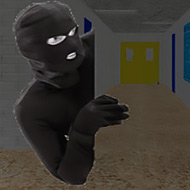


Baldi’s Basics Random Map Series: Insane School
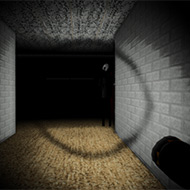




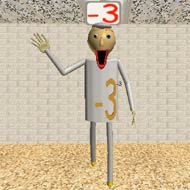

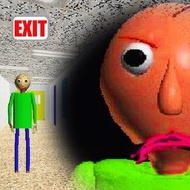
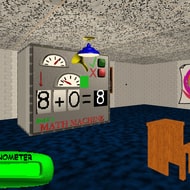
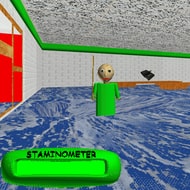
Baldi’s Basics Random Map Series: Insane School places players in a structure that rebuilds itself at the start of every attempt. You move through corridors that shift their order, examine rooms that rotate position, and deal with tasks influenced by an unpredictable layout. Since nothing remains stable for long, each session of Baldi’s Basics Random Map Series: Insane School becomes a test of quick thinking and situational adaptation as you work toward completing objectives while staying safe.
Unstable Layout and Dynamic Pathing
The core element of Baldi’s Basics Random Map Series: Insane School is the randomized configuration that forces players to rethink their route with each run. The environment does not rely on memorization; instead, the structure encourages scanning new paths and revising decisions. Items may appear closer or deeper within unfamiliar sections, and characters may occupy zones that previously seemed safe. Because of this unpredictability, players rely on flexible planning rather than predefined routes.
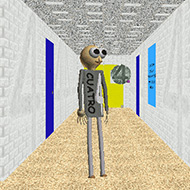
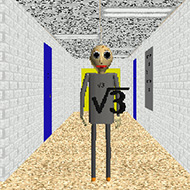
Rooms connect through unpredictable corridors, so navigation becomes a chain of fast assessments. Some areas are compact and easy to examine, while others stretch into twisting structures. The challenge grows when characters move in ways that take advantage of tight corners or long hallways. A change in position or an unexpected turn can force you to switch plans immediately.
Tools, Hazards, and Player Techniques
Baldi’s Basics Random Map Series: Insane School introduces tools that help manage hazards, influence movement, or expand available options. These tools vary widely, and many players experiment to discover which combinations help them deal with the shifting layout. Some tools create safe openings, while others help you avoid specific characters.
- Movement assistance: Items that provide small boosts or let you bypass narrow encounters.
- Environmental triggers: Objects that interact with specific rooms or activate shortcuts.
- Disruption tools: Useful for altering character movement or buying extra time.
- Orientation helpers: Items that support navigation by marking paths or revealing nearby areas.
Because the school changes its structure, these tools become essential for adapting to unpredictable conditions. Players often find success through experimentation rather than strict planning. Even a simple decision, such as which direction to take after leaving a central room, may change depending on what characters are nearby.
Repetition, Discovery, and Progressive Strategy
Repeated attempts reveal patterns within the randomness. Baldi’s Basics Random Map Series: Insane School includes events that influence how fast players must move, when shortcuts appear, or which obstacles become active. Some events introduce timed sections; others modify certain characters. Understanding how these features interact helps players build multilayer strategies that adjust to new layers of unpredictability.
- Begin each run by scanning nearby rooms before committing to a long direction.
- Collect tools early, as they gain value near unpredictable encounters.
- Monitor character positions rather than relying on previous assumptions.
- Choose adaptable routes that allow quick direction changes when necessary.
Baldi’s Basics Random Map Series: Insane School blends environmental instability with task-driven exploration. The design encourages players to refine movement patterns, test different tool combinations, and observe how shifting elements create new challenges. Every run offers a set of changing conditions, ensuring that progress depends on adaptability and awareness across the entire unpredictable structure.